July 6, 2026 · 12:18 AM
The second-coffee buffer: fuel before caffeine becomes the plan
A practical guide to turning the second coffee into a cue for water and a protein-fiber-fat snack, so caffeine supports the afternoon instead of carrying it alone.
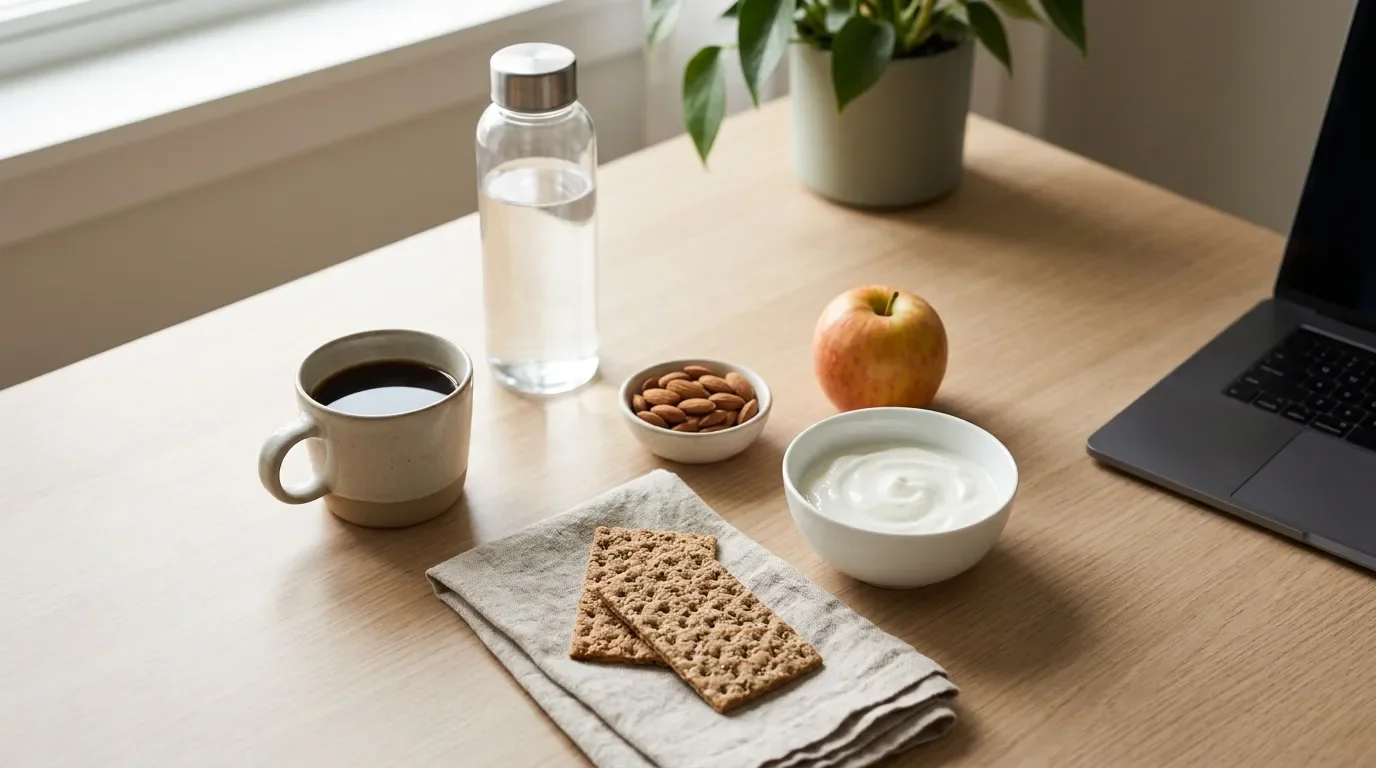
Your second coffee is useful information. If it shows up every workday around 2 p.m., your body may not be asking for more motivation. It may be asking for water, protein, fiber, and fat before the next block of calls starts.
Coffee can fit a healthy adult diet. The FDA says most adults can consume up to 400 mg of caffeine per day without negative effects, though sensitivity, medications, pregnancy, and health conditions change the equation for some people.1 A regular 12-ounce brewed coffee can range from 113 to 247 mg of caffeine, so the second cup is not automatically a problem. It is just a bad fuel plan when it is doing the job of lunch, water, and an actual snack.1
Today’s move: keep the coffee, but make it earn a supporting role.
The performance problem: caffeine is not a snack
Caffeine can make you feel more alert. It does not give your brain a steady stream of usable fuel. That job still depends on the basics: enough fluid, a balanced meal pattern, and carbohydrates that are paired with foods that slow the blood-sugar rise.
The CDC explains that carbohydrates raise blood sugar, and that eating carbs with protein, fat, or fiber slows how quickly blood sugar rises.2 Harvard’s Nutrition Source makes the same practical point from the carbohydrate side: fiber-rich foods digest more slowly, and meals with fat or acid are converted more slowly into sugar.3
That is the whole logic behind the second-coffee buffer. Before another cup becomes the entire afternoon plan, attach it to something that slows the swing.
The daily framework: five windows for a coffee-heavy day
Use these windows as anchors, not rules. The goal is to reduce the number of decisions you have to make while your calendar is already taking most of your attention.
| Window | What to do | Why it helps |
|---|---|---|
| 1. First 60-90 minutes | Drink water before or alongside the first coffee. Add breakfast if your morning runs long. | Hydration research is mixed by context, but a 2013 review notes that even 1-2% body-water loss may impair some cognitive-performance measures.4 |
| 2. Mid-morning | If breakfast was light, add protein before the first big meeting block. | This keeps the first coffee from becoming your only morning structure. |
| 3. Lunch | Build the plate around protein, a fiber-rich carb, and a visible fat. | The CDC plate method uses vegetables, lean protein, and carb foods as the basic meal-planning structure.2 |
| 4. 2-3 p.m. | Before the second coffee, take 8-12 ounces of water and one Power Snack. | This turns the coffee into a cue for fuel, not a substitute for it. |
| 5. Late work / commute | Decide whether you need caffeine or just a closing snack. | The FDA notes that people vary widely in caffeine sensitivity and how fast they eliminate it.1 |
The fourth window is the one to protect. It is late enough for the dip to show up, but early enough that a small structural move can still change the rest of the day.
The Power Snack Formula: pair the cup with real fuel
Use the same formula every time:
Protein + fiber + healthy fat = slower, steadier desk fuel.
That does not require a full meal or a refrigerator. It requires a default combo you can assemble in less than a minute.
Try one of these:
- 🥜 Almonds + apple + whole-grain crackers. Protein and fat from nuts, fiber from the apple, and a small carb bridge from the crackers.
- 🧠 Shelf-stable tuna packet + seeded crackers. Higher protein, crunchy carb, no cooking. Keep a fork in the drawer.
- 🥑 Roasted chickpeas + pumpkin seeds + a clementine. Fiber, plant protein, healthy fat, and enough brightness to feel like a real snack.
- ⚡ Plain Greek yogurt + berries + walnuts, if you have office fridge access. Protein from yogurt, fiber from berries, fat from walnuts.
The point is not perfection. The point is to stop making refined carbs or caffeine travel alone. Harvard notes that high-glycemic foods such as white bread digest rapidly and can cause larger blood-sugar fluctuations, while low-glycemic foods such as whole oats digest more slowly.3
Micro-habits that make this automatic
No meal prep. No new personality. Just fewer ways for the day to drift.
- Put the water bottle between your hand and the coffee. If the cup is on the right side of your laptop, the bottle goes slightly in front of it. Placement beats remembering.
- Make the second coffee a two-step order. Coffee plus snack. Coffee plus water. Never coffee alone.
- Keep one protein anchor visible. Tuna packets, roasted edamame, nuts, jerky, or single-serve nut butter all work. Hidden snacks become emergency snacks. Visible snacks become defaults.
- Use a 10-minute delay, not a ban. When the coffee urge hits, drink water and eat the snack first. If you still want the coffee, have it. This avoids willpower theatre and gives your body something useful while you decide.
- Watch for your personal caffeine ceiling. Jitters, anxiety, insomnia, upset stomach, nausea, headache, and a racing heart are among the signs the FDA lists for too much caffeine.1
The 30-second setup for tomorrow
Before you close the laptop today, set up this exact trio:
- Water bottle filled and visible.
- One shelf-stable protein option in the drawer.
- One fiber-rich carb or fruit within reach.
Tomorrow, when the second coffee thought appears, you do not need a debate. You need a sequence: water first, snack second, coffee third if you still want it.
That is the real performance move. Caffeine stays in the system, but it stops being the whole system.
What is your most reliable second-coffee companion: water, a protein snack, fruit, or something else that keeps your energy steady?
Related content
- Sign in to comment.