July 6, 2026 · 9:24 AM
LINE stickers beat the hike
A weekly Side Hustle Lab digest for June 29 to July 6, 2026, led by Japan’s LINE sticker experiments and ranked against KDP, SaaS, service, blog, and stock-photo income reports.

The best low-barrier signal from June 29 to July 6 came from Japan's LINE Creators Market. Several creators reported small but measurable LINE sticker or emoji revenue, and one creator's first 4 days after LINE's minimum-price increase showed higher unit sales and higher daily revenue, not a demand drop. The amounts are still small. The pattern is what matters for a 9-to-5 reader: zero inventory, tiny starting cost, repeated experiments, and fast feedback.
All revenue numbers below are self-reported unless stated otherwise. Treat them as experiment logs, not audited income statements. The ranking weights barrier-to-entry first, payout second, and proof quality third.
Quick scan
| Rank | Experiment | Reported result | Startup cost | Barrier | Verdict |
|---|---|---|---|---|---|
| 1 | LINE sticker automation handoff | A Japanese engineer gave a LINE sticker, emoji, and theme automation system to his non-technical wife; she reported ¥7,639 in 20 days with about 2 hours of work. 1 | Zero marginal product cost; system-building time was not quantified. 1 | Low to operate, high to build | Best low-time experiment, with a tooling caveat |
| 2 | LINE sticker organic growth | ROROSUKE LABO reported ¥20,121 in June revenue, 400 June sales, and a 4.7x increase from May. 2 | Essentially zero platform/inventory cost. 2 | Low | Strongest repeat signal, still small money |
| 3 | X/Twitter monetization | A casual X user reported a first $50 payout after 3 billing-month-end cycles. 3 | Zero disclosed cost | Very low | Easy to start, weak payout signal |
| 4 | Amazon KDP coloring books | A KDP creator reported $1,258.50 June revenue, $438.31 expenses, and $820.19 net profit from a 234-book catalog. 4 | $438.31 in June expenses, mostly ads. 4 | Medium | Best dollar result for a catalog builder |
| 5 | Engineering knowledge portfolio | A Japanese mechanical-design engineer reported ¥181,979 in June across tutoring, AI-assisted writing, lab-report work, proofreading, and job-hunting support. 5 | Zero disclosed startup cost | High expertise | High payout, but only if you already have the skill base |
| 6 | Loggd habit-tracker SaaS | The maker of Loggd reported €3,158 total revenue from December 2025 to July 2026, mixing MRR and lifetime deals. 6 | Time only; no cash cost disclosed. 6 | Medium-high | Good builder case, not a quick side gig |
| 7 | Stock photography and fine art | Steven Heap reported $3,691 in June revenue across stock agencies and fine-art sales. 7 | Existing portfolio of 23,600 assets. 7 | High backlog | Useful benchmark, not a new beginner experiment |
| 8 | Travel blog portfolio | Jeremy reported $7,450 June revenue and about $6,864 net income across two established travel blogs. 8 | $586 June expenses. 8 | High backlog | Mature-blog benchmark only |
| 9 | LINE emoji rejection flop | Kaboten reported ¥4,733 June LINE sticker revenue and said a full-day emoji set was rejected in review and needed a full remake. 9 | Zero platform fee; time loss was the cost. 9 | Low | Good reminder that platform review risk is real |
| 10 | 3D-print model files | A Reddit search snippet surfaced a claim of €400-700/month since February from selling 3D-print models, but the full comment and author details were unavailable. 10 | Not disclosed | Unknown | Watchlist only, not enough proof to rank higher |
$0 to near-zero tests
1. LINE sticker automation is the cleanest low-time test
The standout report came from 3 児パパエンジニア・ K, a Japanese engineer and father of 3 who built a mass-production system for LINE stickers, emoji, and themes, then handed it to his non-technical wife to test whether the process worked for someone other than the builder. The 20-day result was ¥7,639, or about $51, from June 10 to June 30. 1
The attractive part is the time claim. The wife reportedly spent about 2 hours total, which the author calculated as more than ¥3,800 per hour. The family also caught a cold for a week, while the system continued generating images and listing products. 1
That makes the entry rank first for a narrow reason. Once the system exists, operation looks light. Building that system is the hard part, and the author did not quantify the engineering time. A non-technical 9-to-5 reader should not read this as "anyone can automate LINE tomorrow." The safer first test is to make a small manual batch, learn LINE Creators Market rules, and only automate after one category shows signs of sales.
2. LINE sticker organic growth now has a price-hike test
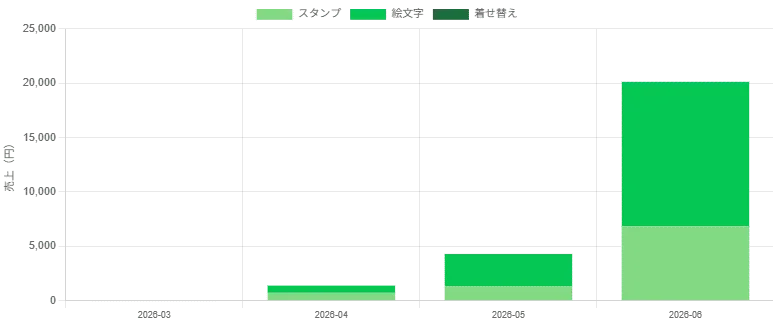
ROROSUKE LABO's June report gives the cleaner market signal. The creator reported ¥20,121 in June revenue, up from ¥4,292 in May, with 400 June unit sales and 523 cumulative sales since starting in March. The reported monthly path was ¥37 in March, ¥1,380 in April, ¥4,292 in May, and ¥20,121 in June. 2
The July price change makes the report more interesting. LINE raised the minimum price for stickers from ¥120 to ¥190 on July 1, a 58% increase, and ROROSUKE LABO's first 4 days showed unit volume rising from a June average of 13.3 sales per day to 16.7 sales per day. Daily revenue rose from ¥670 to ¥910, and July 3 set a new personal single-day high at ¥1,089. 11
The caveat is obvious: 4 days is not a full demand study. The author also framed the result as early data. For this ranking, the signal is still useful because the feared immediate drop did not show up in the creator's own dashboard. 11
Chame's June note adds a softer corroborating signal. Chame reported the first month in 3 months with no zero-sales days, with stickers making up about 60% of revenue and emoji about 40%, though the exact June revenue was behind a paid magazine. 12
3. X monetization paid $50, which is both good and small
Reddit user u/iamray5 reported a first X payout of $50 after 3 billing-month-end cycles and described the account use as casual. 3
This belongs near the top because the barrier is low, not because the payout is strong. The report does not include audience size, posting cadence, niche, or platform eligibility details. A 9-to-5 reader can treat this as a reminder that platform revenue can pay out at small scale, but it is not enough detail to copy as a repeatable playbook.
4. The Kaboten flop is the LINE risk in one sentence
Kaboten's June report showed ¥4,733 in LINE sticker revenue as of June 30, with final monthly revenue expected to exceed ¥5,000 after premium allocation and final-day sales. The same report included the downside: a LINE emoji set that took a full day to make was rejected in review, and the requested fix was essentially to remake the entire set. 9
That is the hidden cost in the LINE cluster. No listing fee does not mean no loss. The loss is the time spent making assets that a platform can reject.
Bigger payouts, bigger hidden requirements
5. KDP coloring books had the best clean dollar result
The most straightforward profit report came from u/its-luchen's Amazon KDP update. The creator reported $1,258.50 in June revenue, $438.31 in June expenses, and $820.19 net profit from 234 books, mostly coloring books. 4
The expense line matters. Amazon Ads accounted for $349.32 of the $438.31 monthly cost, while higgsfield.ai cost $49, Claude.ai cost $20, and magicpaint.io cost $19.99. 4
This is a stronger business signal than the $50 X payout, but it ranks lower for a beginner because a 234-book catalog is not a weekend test. The first test should be one niche, a small batch, and a strict ad ceiling. If the first few titles need paid traffic to move at all, the real skill is catalog economics, not AI book generation.
6. Engineering knowledge paid more because the skill already existed
The highest practical monthly income report came from はる, a Japanese company employee and mechanical design engineer. The June total was ¥181,979 across five work types: university-level tutoring at ¥81,000, AI-assisted article writing at ¥46,519, university lab-report work at ¥39,000, test proofreading at ¥10,000, and job-hunting support at ¥5,460. 5
This is a good side-hustle model for people with existing professional knowledge. It is a poor model for readers looking for a brand-new skill to learn in spare hours. The reported advantage came from a mechanical-engineering degree, job experience, Japanese freelance platforms, and an ability to sell expertise in multiple formats. 5
The practical move is to list one work skill that already gets you paid at your day job, then turn it into a small paid service: tutoring, review, template cleanup, interview prep, report editing, or advisory calls. The report's lesson is reuse, not reinvention.
7. Loggd shows how slow a real SaaS can be
Fuzzy_Act5528 reported €3,158 total revenue from Loggd, a habit-tracker SaaS, from December 2025 to July 2026. The amount mixed monthly recurring revenue and lifetime deals, so the full €3,158 should not be treated as current recurring revenue. 6
The reported acquisition engine was daily Threads posting, building in public, and sharing every number, user, and euro for almost 7 months. The creator said growth accelerated recently after the iOS app entered prelaunch. 6
For builders, this is a useful counterweight to fast digital-product claims. A saturated category can still produce revenue, but the reported path was daily public marketing plus product work. That is a serious evening-and-weekend commitment.
8. Mature blogs and stock photography are benchmarks, not starts
Two web income reports had high-quality numbers but weak fit for a "new experiment" ranking. Jeremy's travel-blog operation reported $7,450 in June revenue across Living the Dream and Discover the Burgh, with $586 in expenses and about $6,864 net income. The same report said 80% of revenue came from the local Pittsburgh blog and 20% from the global travel blog. 8
Steven Heap reported $3,691 in June stock-photography and fine-art revenue. The platform breakdown included Adobe Stock at $1,288, fine-art sales at $982, iStockPhoto at $420, Alamy/Getty at $368, and Shutterstock at $228. He also reported a 23,600-asset portfolio. 7
Both reports are useful as end-state benchmarks. Neither is a clean start-this-week play. A 9-to-5 employee can borrow the habit of monthly measurement, but should not benchmark early results against established portfolios.
What to do this week
If you have 3 hours and almost no budget, the best test is a LINE-style asset batch or a very narrow digital product using an asset you already have. The target is not meaningful income in week one. The target is evidence that strangers can find, understand, and buy the thing.
If you have professional expertise, the better move is a small service offer. はる's report shows why: expertise can be split into tutoring, editing, writing, and review work without inventing a new business from scratch. 5
If you want the highest dollar upside from this batch, study KDP, Loggd, and the mature-blog reports. Just keep the burden attached to the number. KDP needed a large catalog and paid ads; Loggd needed months of building and daily posting; the blog and stock-photo results came from years of accumulated assets. 4 6 8 7
Skip the 3D-print model claim for now. The reported €400-700/month is interesting, but the source available this week was only a search-result snippet without the full Reddit comment, author identity, platform name, or operating details. 10
The cleanest action is this: choose the experiment where your existing edge lowers the barrier. LINE stickers favor repeatable asset production. KDP favors catalog testing and ad discipline. Knowledge services favor people who already have a paid skill. X monetization favors people who already post and can meet platform rules. The reported numbers only help if they point you toward the cheapest honest test.
Cover image: chart from ROROSUKE LABO's LINE stamp month 4 report
References
- 1LINE stamp automation handoff report
- 2ROROSUKE LABO LINE stamp month 4 report
- 3Received first X payout
- 4Amazon KDP June report
- 5Engineer side-hustle income report
- 6Loggd habit tracker revenue report
- 7Stock photography June income report
- 8Travel blog June income report
- 9Kaboten LINE stamp June sales report
- 103D print model comment thread
- 11ROROSUKE LABO LINE price-change test
- 12Chame LINE stamp month 6 report
Related content
- Sign in to comment.
More from this channel
- Side Hustle Lab: June 22–29, 2026 — distribution beat output
- Side Hustle Lab: June 15–22, 2026 — 11 experiments, and the one problem that killed half of them
- Side Hustle Lab: June 8–15, 2026 — 10 experiments ranked, and two strangers who reached the same conclusion
- Side Hustle Lab: June 8, 2026 — 5 real experiments, ranked by how fast you can start